Adventures In Baby Steps
As an Amazon associate, I may earn a small commission if you navigate to Amazon from my site and buy something. This will not result in an extra cost to you.
Let’s talk about money. Cash. Filthy lucre.
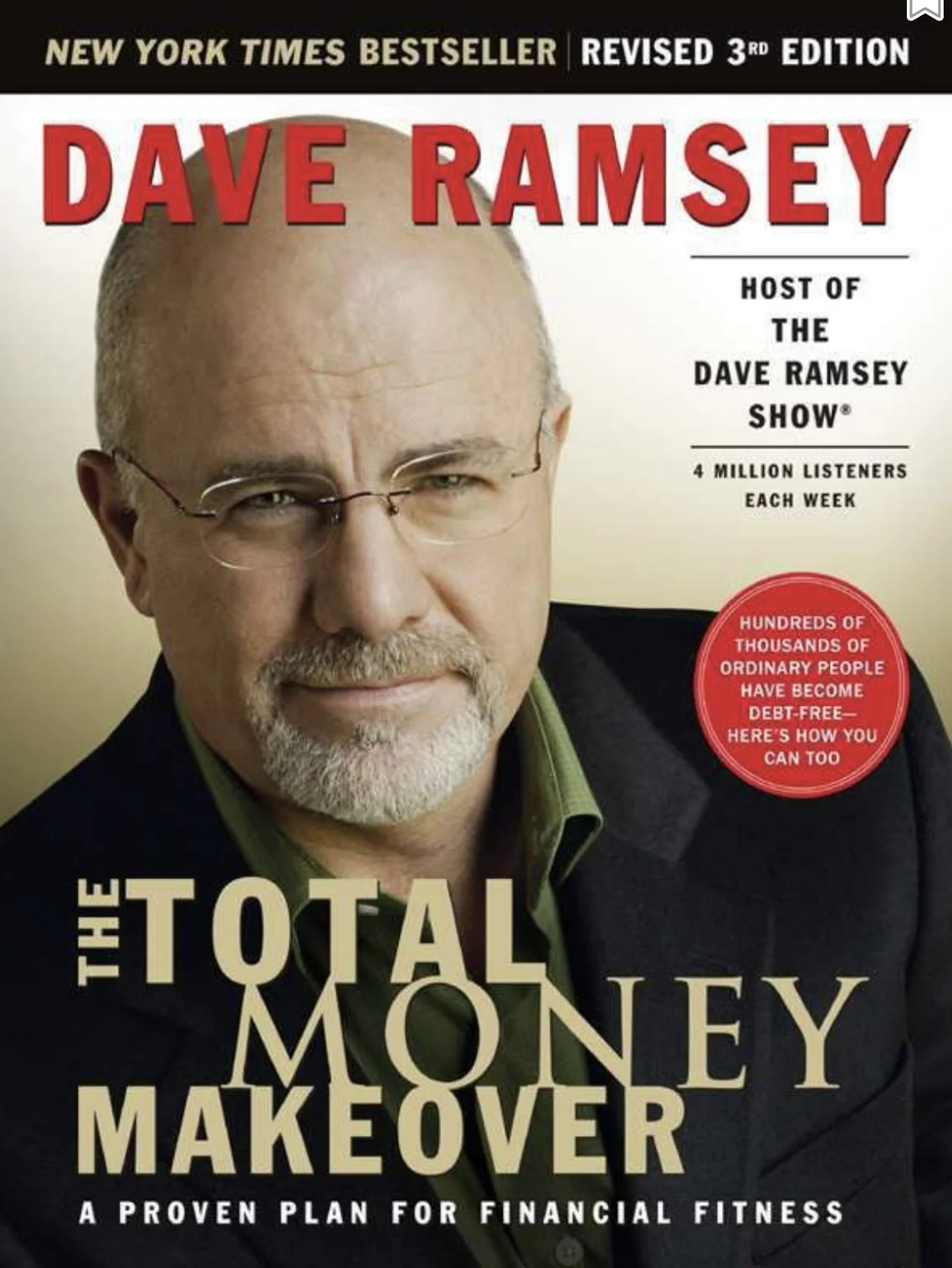
A number of years ago, when I was really struggling with my finances, my mother gifted me a book entitled The Total Money Makeover, written by Dave Ramsey. At the time, I was making plenty of money, but I was being so irresponsible with it that I was in terrible financial shape. My mother gave me the book at exactly the right time…any earlier, and I would not have been prepared to take it all in, and any later, and I’d have been in real financial trouble.
The crux of the book is essentially that proper money management has little to do with math and almost everything to do with behavior. As Ramsey leads the reader through the concepts, he provides lots of encouraging testimonials along the way. The ideas are simple and easy to understand. But applying them takes real determination and discipline. To assist with the discipline, Ramsey has laid out the plan in seven steps. He calls them baby steps.
Step 1–get yourself $1000 in cash as a sort of starter emergency fund. Do the absolute minimum payment on everything else, and find a way to scrape together the cash. Sell things if you can. Get it done fast.
Step 2–start your “debt snowball.” Get out of debt, except for your house. This means you will pay the minimum on every single bill you have except one. Focus on that one, and put every single penny you can scrape together toward that one debt. Do this until that debt is gone, and then attack the next one. Your debts will be ordered by size…you will work on the smallest debt first, and work your way up to the largest. Don’t try to be clever by working on the debt with the highest interest rate first. This isn’t about math…it’s about behavior. The little “wins” you acquire each time you pay off a debt will inspire and encourage you to stick with it, dig in harder, and pay off the next one.
The “snowball” concept comes into play because as you pay off each debt, you are freeing up more income to attack the next one, and then the next one. Your available income gets larger with each debt you pay off.
Step 3–now that your debts are paid off (except for your house), you should have a lot more cash available to you. You will now use it to build yourself a proper emergency fund. Ramsey says your emergency fund needs to be able to cover 3-6 months of expenses. I personally have built myself a much larger emergency fund for my own peace of mind. Peace of mind is worth a lot of money to me.
Step 4–save 15% of your gross household income into retirement funds, whether that be a 401K with your employer or a Roth IRA or whatever. Ramsey recommends investing in mutual funds every month. This money needs time to grow so you need to invest it EVERY month faithfully. This step alone gets you quite close to wealthy by the time you’re ready to retire. This step is obviously ongoing and should be worked at the same time as steps 5 and 6.
Step 5–I have no children, so I skipped this. But this step is where you save and invest for your kids’ college funds. There is more than one tax-protected way to do this, but you need to save, save, save. Don’t let your kids go into debt for college.
Step 6–pay off your house. While saving for retirement and college funds, scrape together any extra money and put it toward your house. This will likely take you a few years, but stick with it and get it done. Ramsey says the backyard grass under your bare feet feels different when you own it outright. And I can confirm that he is right about that.
“Money is good for FUN. Money is good to INVEST. And money is good to GIVE.”
Step 7–Once everything else is handled, just build wealth. Ramsey says that he’s only found three good uses for money. Money is good for FUN. Money is good to INVEST. And money is good to GIVE. Build wealth, use some of it to have fun, and give some of it away.

That’s the 7-step plan in a nutshell. And like Ramsey says, it’s simple but not easy. You have to be determined for quite awhile. One tool to help you stay determined to manage your money is a budget. This book doesn’t go much into budgeting; you’ll have to grab his other book Financial Peace for that; better yet, find one of his classes in your area and take it.
I resisted making budgets for a long time…every time I’d start to set one up, I’d get depressed about the state of my finances and stop working on it. Also, the whole idea felt very restrictive to me. Once I pulled myself together and started working from a budget, I was shocked to find it completely liberating.
What is the difference between saying “I can’t afford that” versus “That’s not in the budget”…? On the surface, those two statements seem like the same essential idea. But they are not. “I can’t afford that” implies that only a lack of money keeps one from doing/buying the thing in question. If only one had more money, one could afford that. But “That’s not in the budget” is a whole different kettle of fish. That means that I have already decided what to spend my money on this month and that thing (whatever it is) didn’t make the cut. It’s about ownership of your choices, and since financial peace is more about behavior than math, this is an important distinction.

A souvenir from the gentleman who ran my Financial Peace University class…a reminder that debt will drag down your finances.
Personally, I build a monthly budget for myself before the start of every month. I’ve been doing it for years now, and it’s not hard or time-consuming. And it gives me peace of mind, as well as the ability to say with perfect equanimity “Sorry, I can’t do that, it’s not in my budget for this month.” I could say “I’ve chosen to spend my money on other things that I consider more important” but that might be considered rude by some. Just say it’s not in the budget. People will understand. Or they won’t. Either way, it’s your money, and your decision.
If you find you like the books and want more daily encouragement, you might it helpful to listen to Ramsey’s daily radio show. Ramsey speaks to callers about their particular circumstances and gives advice. The vast majority of the advice revolves around the baby steps. So while you’ll hear the same concepts over and over again, hearing how they apply to real-life examples is very helpful. When I was really digging into my debt snowball, listening to this show every day during my commute really helped me stay focused. You can find it in podcast form or on one of the streaming services that does radio shows. You can also watch it on YouTube, if that’s your thing.
I don’t talk about money matters very often, but when the subject comes up, I say that Dave Ramsey and his Total Money Makeover changed my life. It’s no exaggeration and I wouldn’t have it any other way.