Adventures In Endurance
As an Amazon associate, I may earn a small commission if you navigate to Amazon from my site and buy something. This will not result in an extra cost to you.
How often should you wash your hair? If you ask the interwebs this question, you’ll get lots of different answers (mostly based on “hair type”) which all boil down to “as often as you need to.” The different answers mostly agree that washing too often strips the hair of protective oil and makes it more dry and brittle, but washing too seldom allows for buildup on the scalp that can also be damaging to the hair.
My personal routine: refrain from washing until I can’t endure the oiliness anymore, and then wash with my Herbal Essences clarifying shampoo, scrub the shampoo into my scalp with my nifty silicon scrubber, then use my Native hair mask on my ends.
When I say refrain from washing as long as I can endure, I mean until my scalp is noticeably oily, whether by appearance or feel. Currently, I manage to wash my hair only every five days or so (perhaps a little more often during a hot summer). But…I can stretch that to seven days if I use a dry shampoo.
You can buy dry shampoo, of course; it mostly comes in a spray form, which is not great for the environment and usually includes extra ingredients which are not great for you. But it’s so very easy to make your own. Honestly, you can do it with one single ingredient: corn starch or arrowroot powder. Either will work equally well.
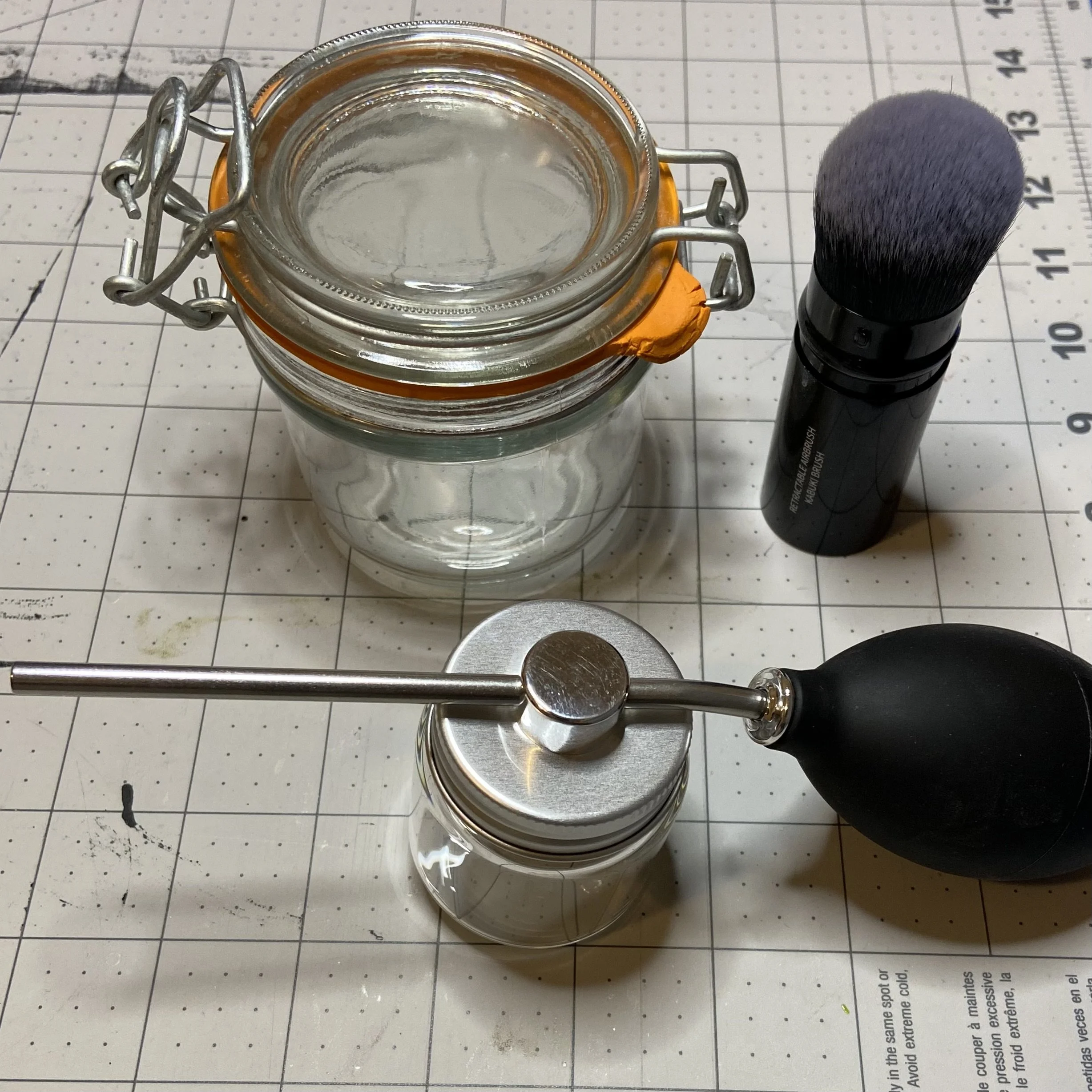
You just sparingly sprinkle (from a salt shaker sort of container) or brush (using a large makeup brush dipped into the powder) the powder onto your roots, massage it in with your fingertips, and then leave it alone for at least five minutes. The powder absorbs the oil and you suddenly have non-greasy hair. Then you use a proper brush (like my favorite boar bristle brush) to brush it out. Mind you, a lot of the powder stays in your hair, mostly close to your scalp. This doesn’t really show, and gives the result of a little extra body in your hair, which is useful for some hairstyles.
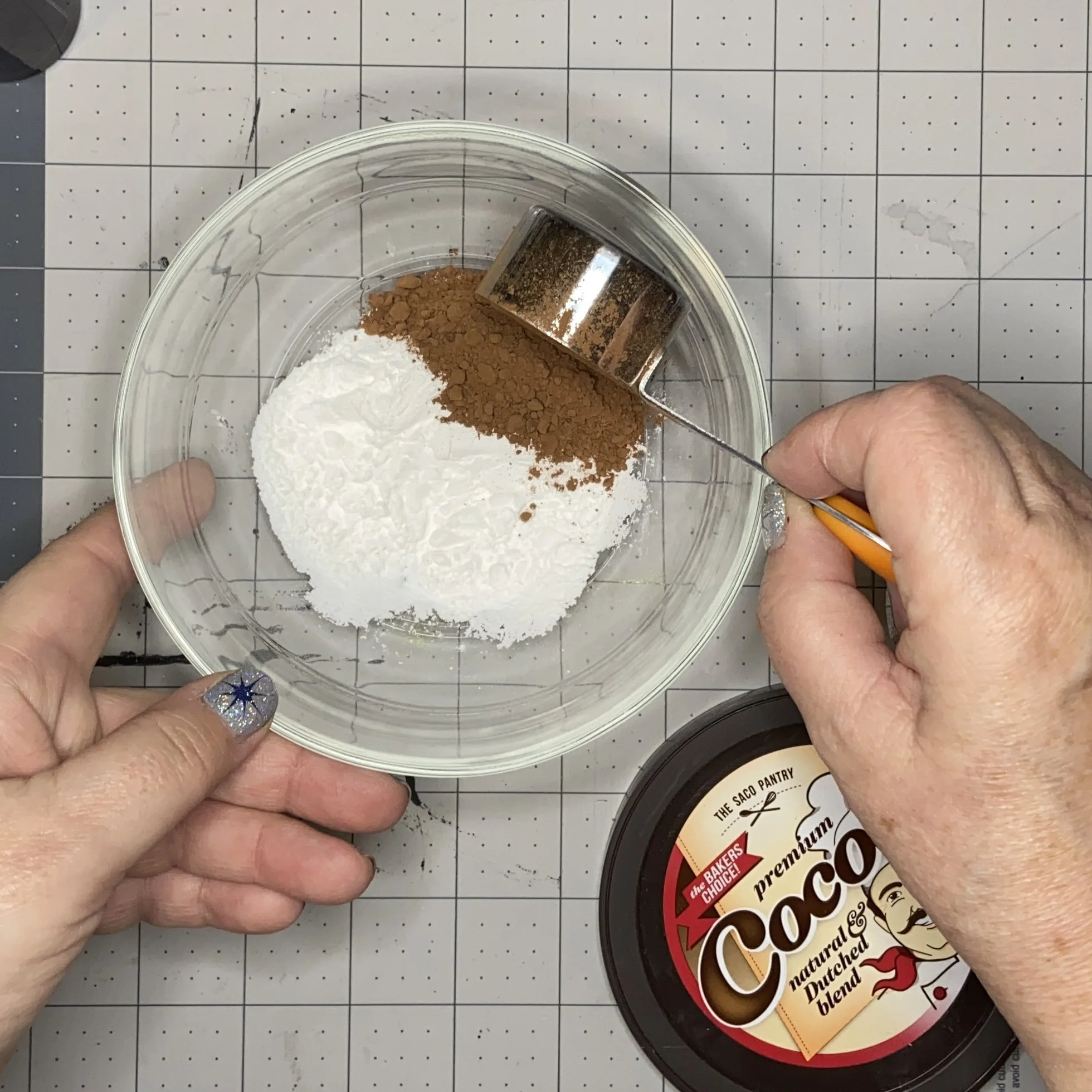
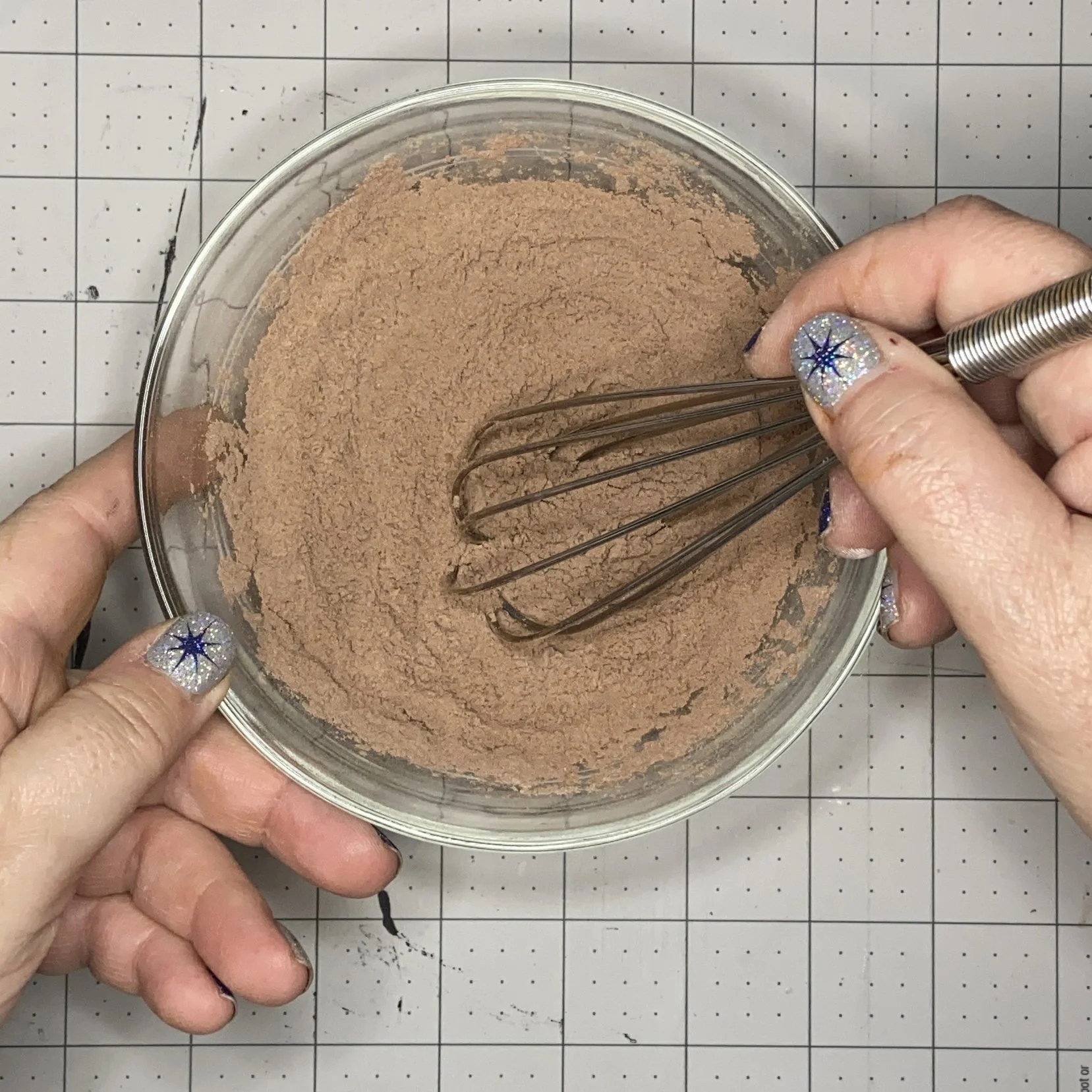
Now, you can of course make this a lot more complicated. For instance, you could add a coloring agent for darker hair, such as red clay powder or activated charcoal. Both those items would also aid in the absorption of oil. But if, like me, you didn’t have any of those ingredients lying about, you could add something like cocoa powder. I made a version (which I will gift to my favorite local sister-in-law) that was 50% arrowroot powder and 50% cocoa, whisked together and then poured into an airtight jar. This can be applied with a big makeup brush: just dip the tip into the powder, tap off ALL the excess, and then dab it into your scalp along a parting. Part the rest of your hair by sections and repeat. Do not go crazy with the powder…use a light touch. You can always add more if needed. Massage it in, leave it for five minutes, then brush it out. Works great.
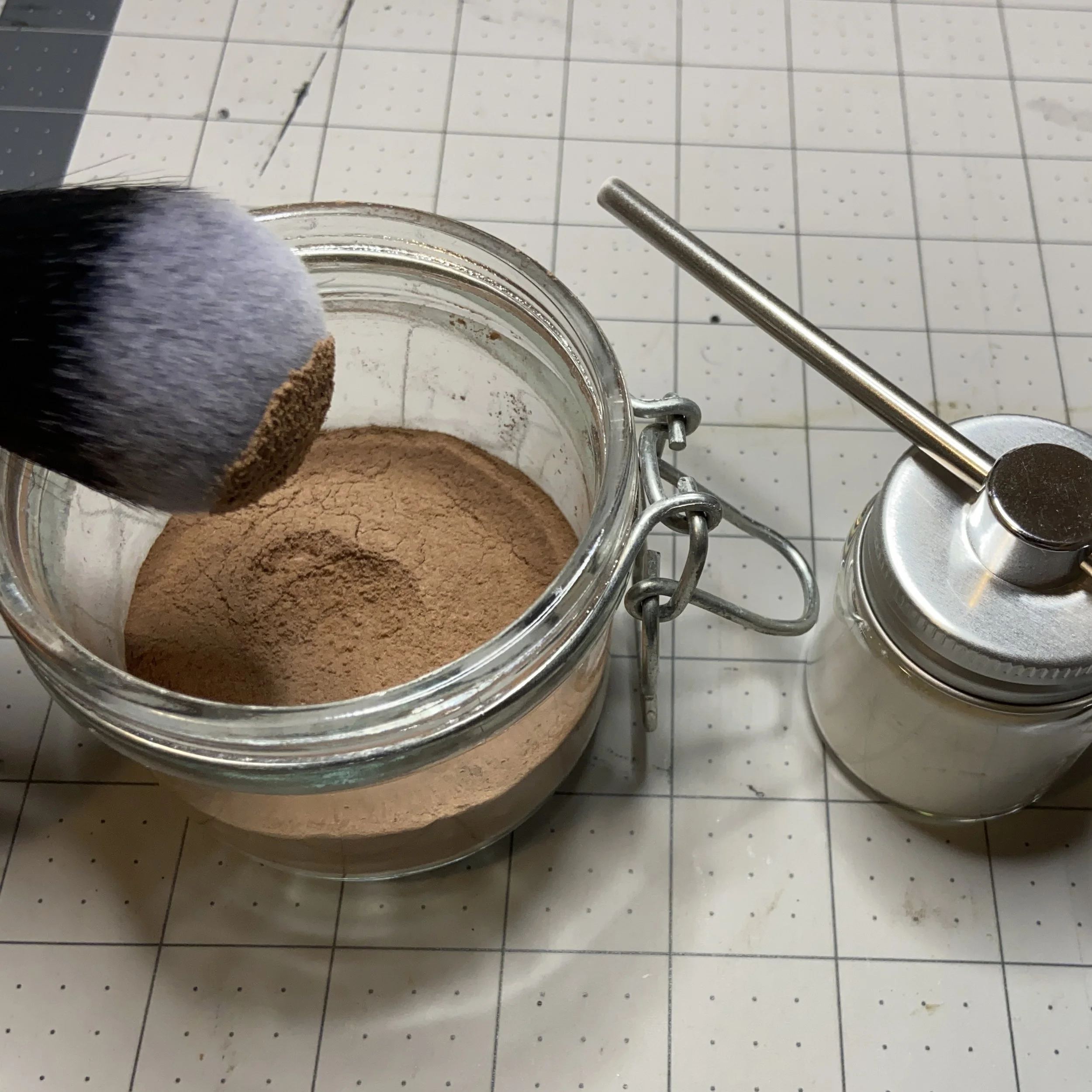
For my own use, I started with corn starch to which I added some Bay Rum essential oil, which is a scent that I love. I whisked it all together, and put it into the receptacle of a powder spray bottle. You can get many versions of such a spray bottle, but I like the fact that mine has a long metal tube. I don’t need to part my hair; I can just run the metal tube along my scalp and dispense as I go. Again, less is more. Don’t overdo the powder. For the record, I have dark hair, and I didn’t have any problem using a white powder. It vanished into my hair like it never existed, taking the oil with it, but leaving behind just a hint of bay rum. Lovely.
Two cautions: First, I have mentioned in a previous blog post that I sometimes add a special oil to my scalp to help prevent excessive hair loss. I would not add dry shampoo to my hair prior to a washing where I plan to oil my hair. The combo of a lot of added oil and the oil-absorbing powder is bound to make more of a mess than one bargained for.
Second, I would not use dry shampoo more than once between regular washing. Used in moderation, it’s great. Used too often, the potential buildup on the scalp can lead to problems.
Give this a try, especially if you already buy and use dry shampoo in an aerosol can; homemade is cheaper, healthier, and at least as effective.