Adventures In Ingenuity
As an Amazon associate, I may earn a small commission if you navigate to Amazon from my site and buy something. This will not result in an extra cost to you.
I know that I’ve already mentioned that I believe knitwear designer Martina Behm to be a genius. (More than once, actually.) But she is not the only knitwear designer that I consider a genius. I’d like to introduce you to another: she goes by the quirky moniker Wooly Wormhead and works primarily with hats.
A brief excerpt from her website woollywormhead.com in the bio section gives a quick glimpse at her background:
“I originally trained in electronic engineering and worked in the industry for a number of years before returning to my first love – textiles. From there, I studied textile technology, then fine art and sculptural textiles, before completing my post-grad in education. I then taught art and textiles in London for several years. I have pulled from this knowledge to question the structure of the humble knitted fabric, and challenge our understanding of construction.”
This relatively modest blurb doesn’t even come close to explaining WW’s sheer genius. Working colored patterns in knitting by use of short rows (rows that do not go all the way across the fabric, for the muggles) is not a new idea. Swing knitting is one way to do it. Google that if you want to know…I never really wrapped my brain around it. But swing knitting limits the amount of shaping that can be done. WW also considered creating individual shapes with short-row shaping and then joining them together later, but she found that also fell short of what she wanted, which was a way to build shaping into a knit object using short row colorwork in some way that required minimal finishing work and could be worked in the round as well as flat. So WW basically invented a new way to do short row colorwork, one which carefully accommodated whatever shaping needed to be done.
If all this sounds a little complicated and technical to you…well, it really is. Let me try another way. Look at this hat.
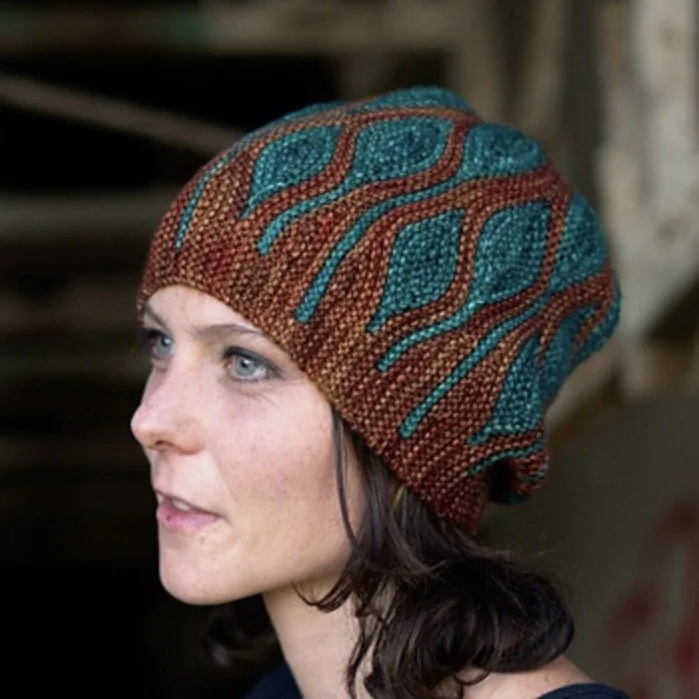
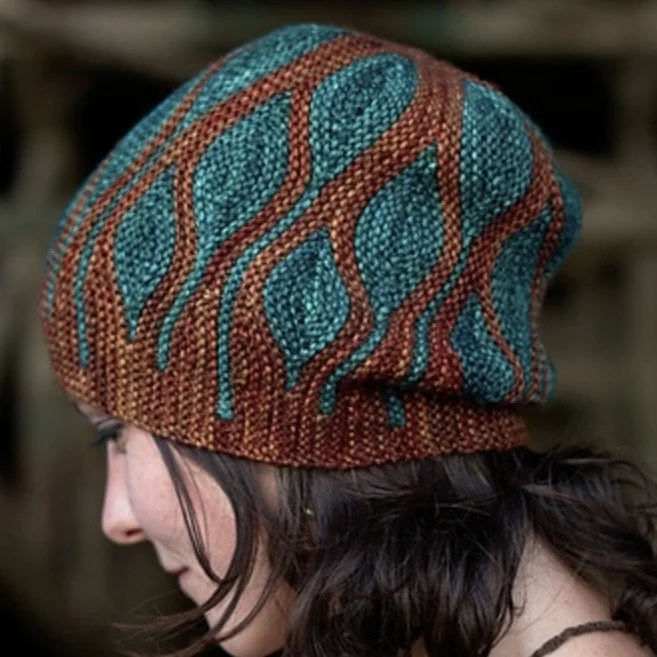
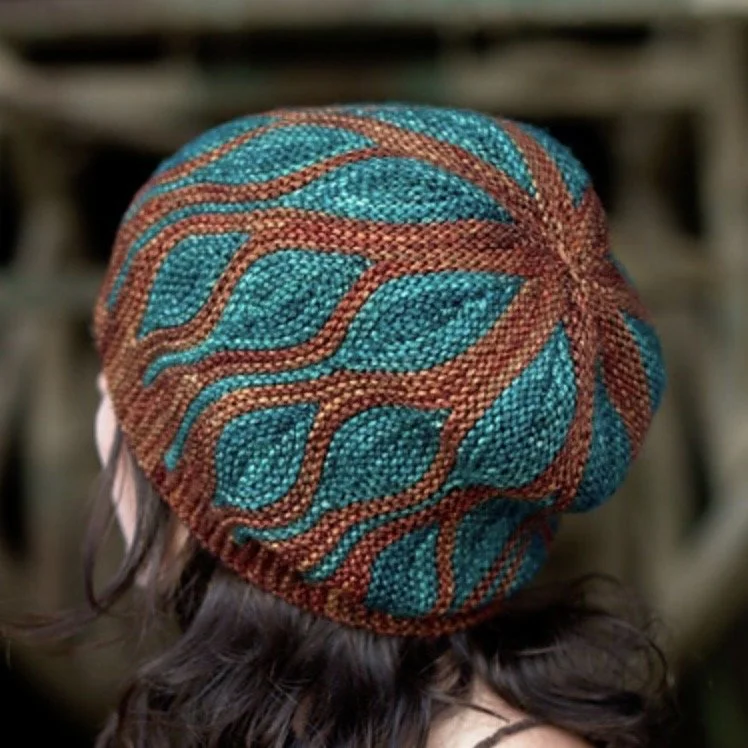
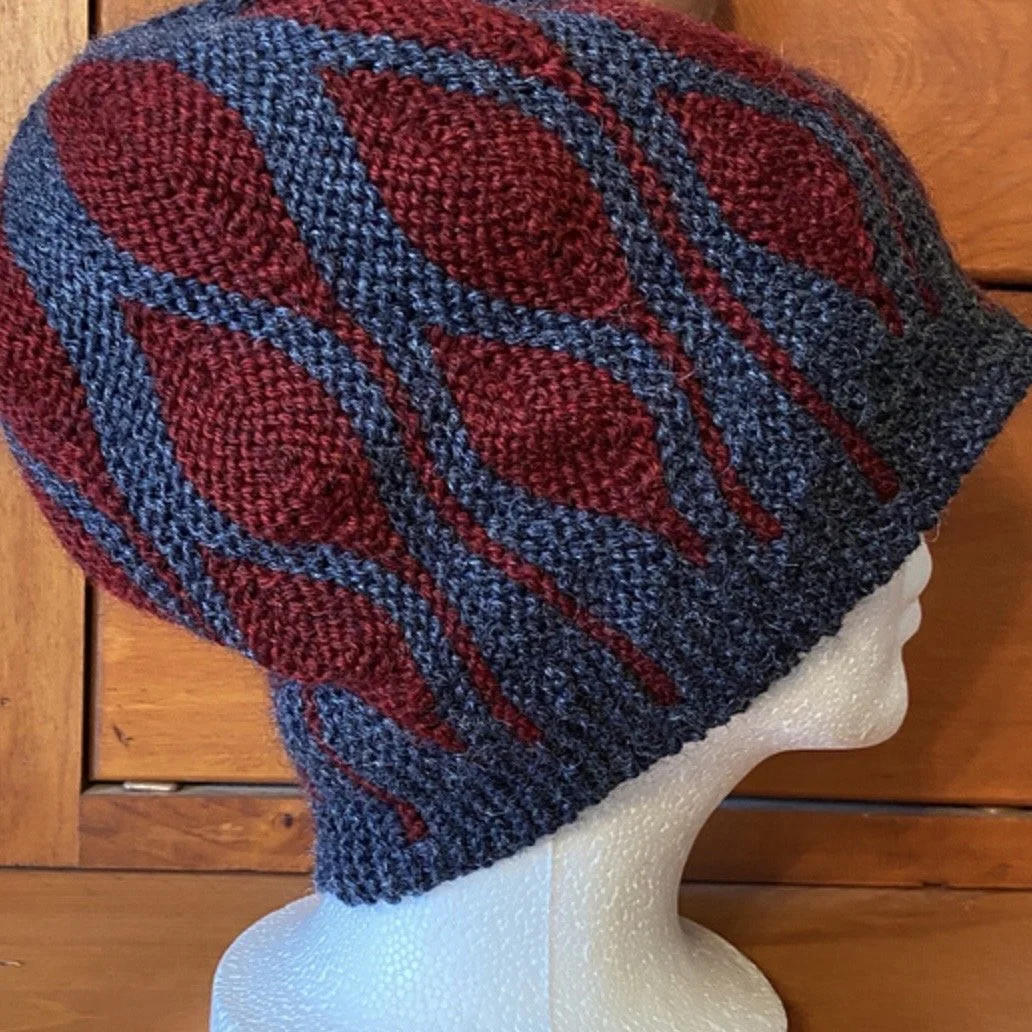
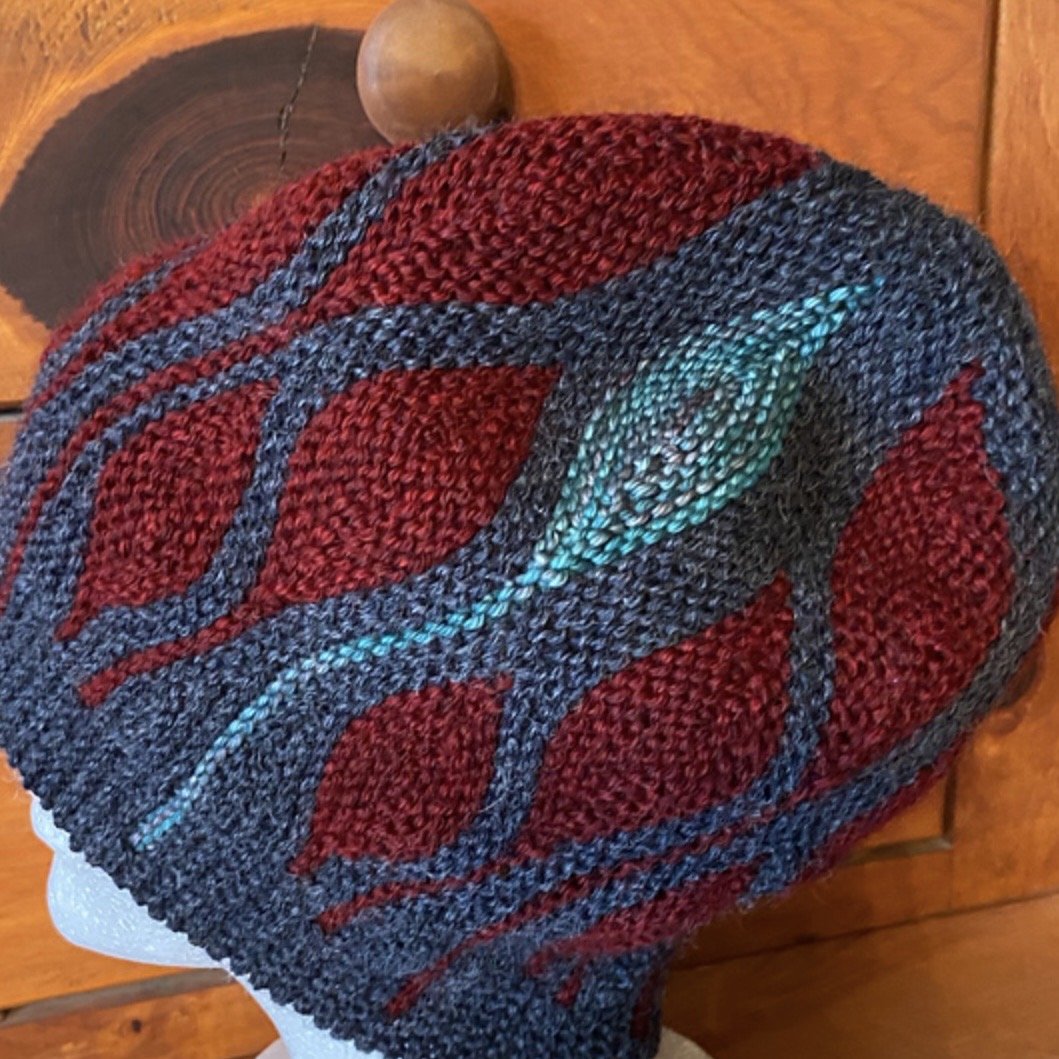
The name of the pattern is Toph and you can get it on Ravelry. It is so clever and beautiful that I had to make it. It’s the first WW pattern I ever knit and I believe it’s also one of her most popular patterns, with good reason. Quite aside from the fact that it’s gorgeous, look at the way the short rows make the leaf shapes. And then look at how the leaf shapes and the interstitial spaces come together to form the shape of the hat. It’s genuinely astonishing. And as intricate and complicated as it looks…I had absolutely no trouble following the pattern to make this hat successfully. This is, of course, indicative both of good design and excellent pattern instructions. I can’t resist showing you a couple pictures of my own creation…I added one leaf in a different color just for fun. Or maybe because I made this out of scrap yarn from the stash and was running low on my leaf color.
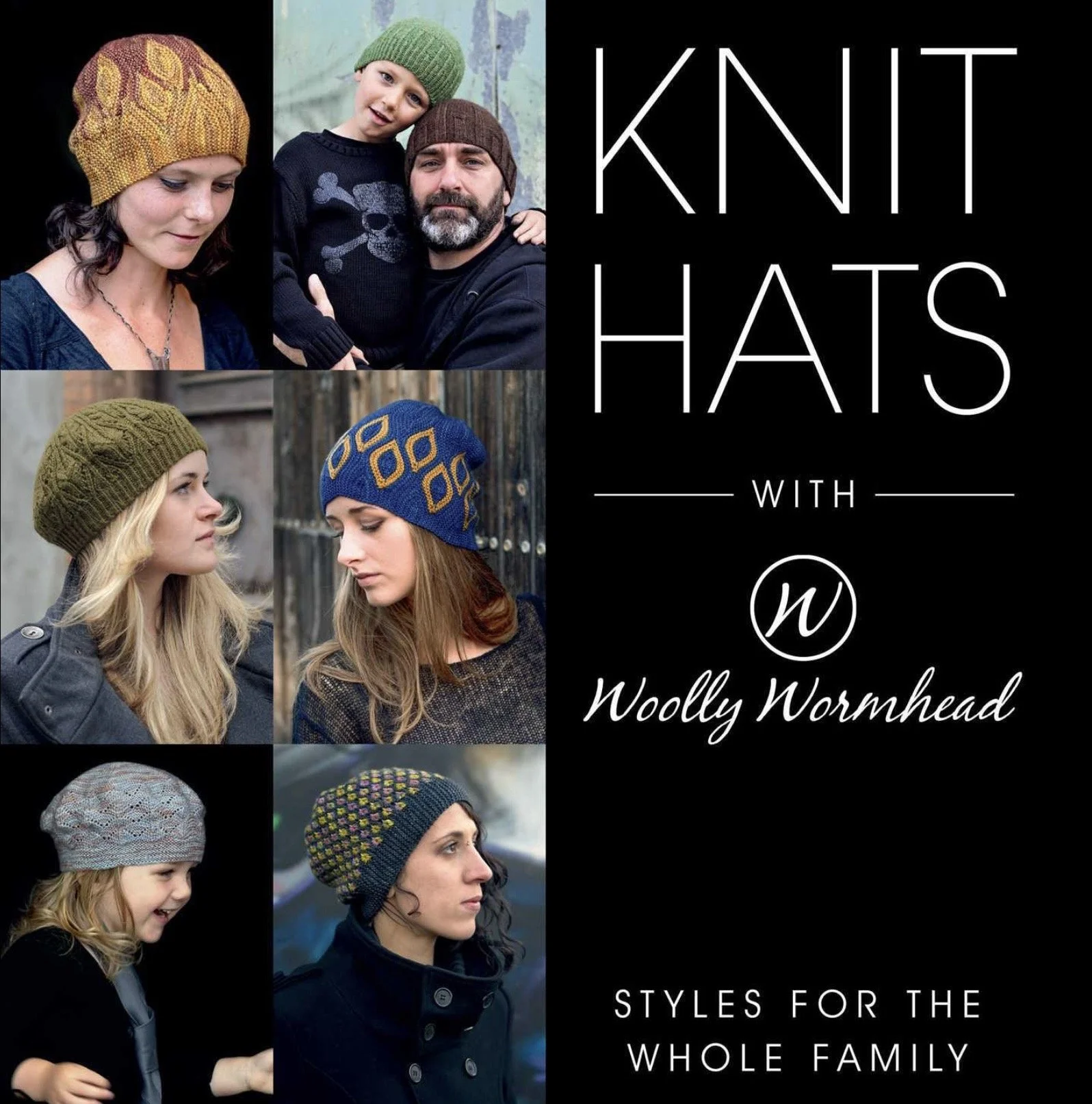
All of this bring me round to the actual subject of today’s blog post. WW has published more than one book, most of which are collections of her patterns. I recently bought Knit Hats With Wooly Wormhead. The book is divided into sections: For Her; For Him; For Kids; and then a section at the end chock-full of helpful information. The book does have some of WW’s classic short-row designs but also lots of other styles, all of which are clever and interesting. The information section at the end covers topics like: The Right Size; The Thing with Hair; Hats and Glasses; and a series of knitting techniques used in her patterns. It’s quite a beautiful book, and I’m rather keen to try Infilare (mostly for the stretchy brim made of tiny little tucks…so clever!); Azula (similar to Toph but sufficiently different that I wouldn’t feel like it was a repeat); and Klastar (which is beautiful and so unusual in construction that even reading the pattern a couple times wasn’t enough for true comprehension; I’ll just have to make it.)
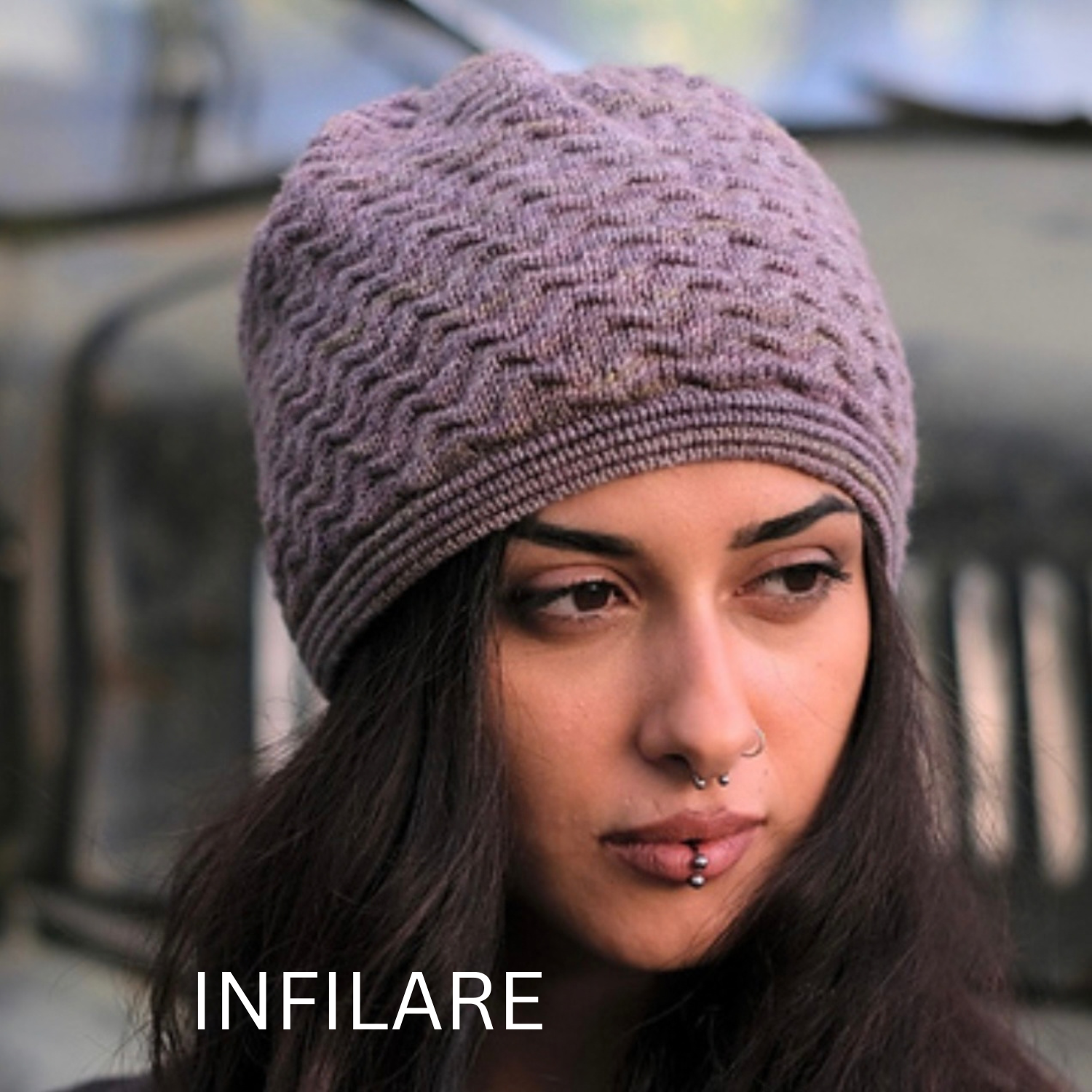
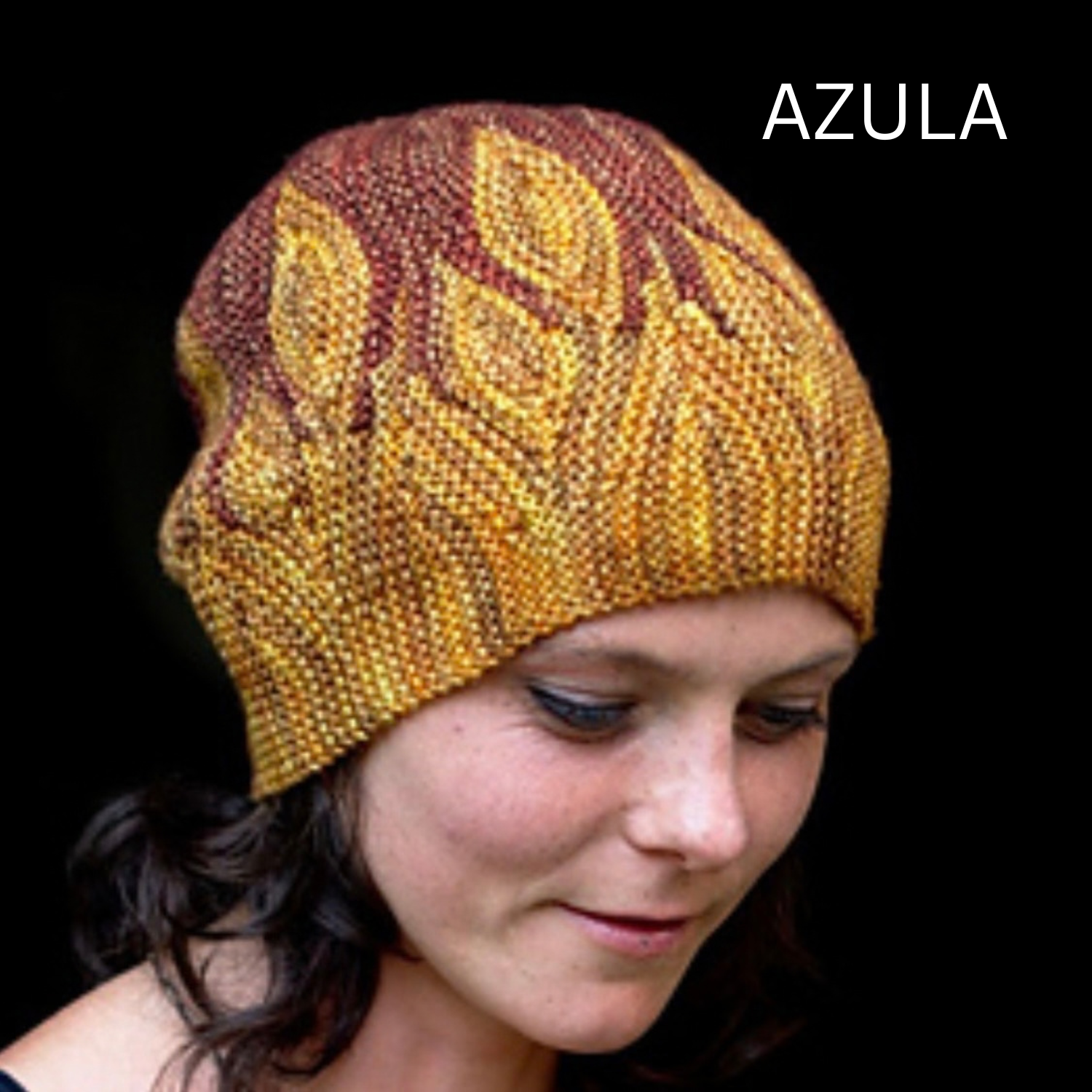
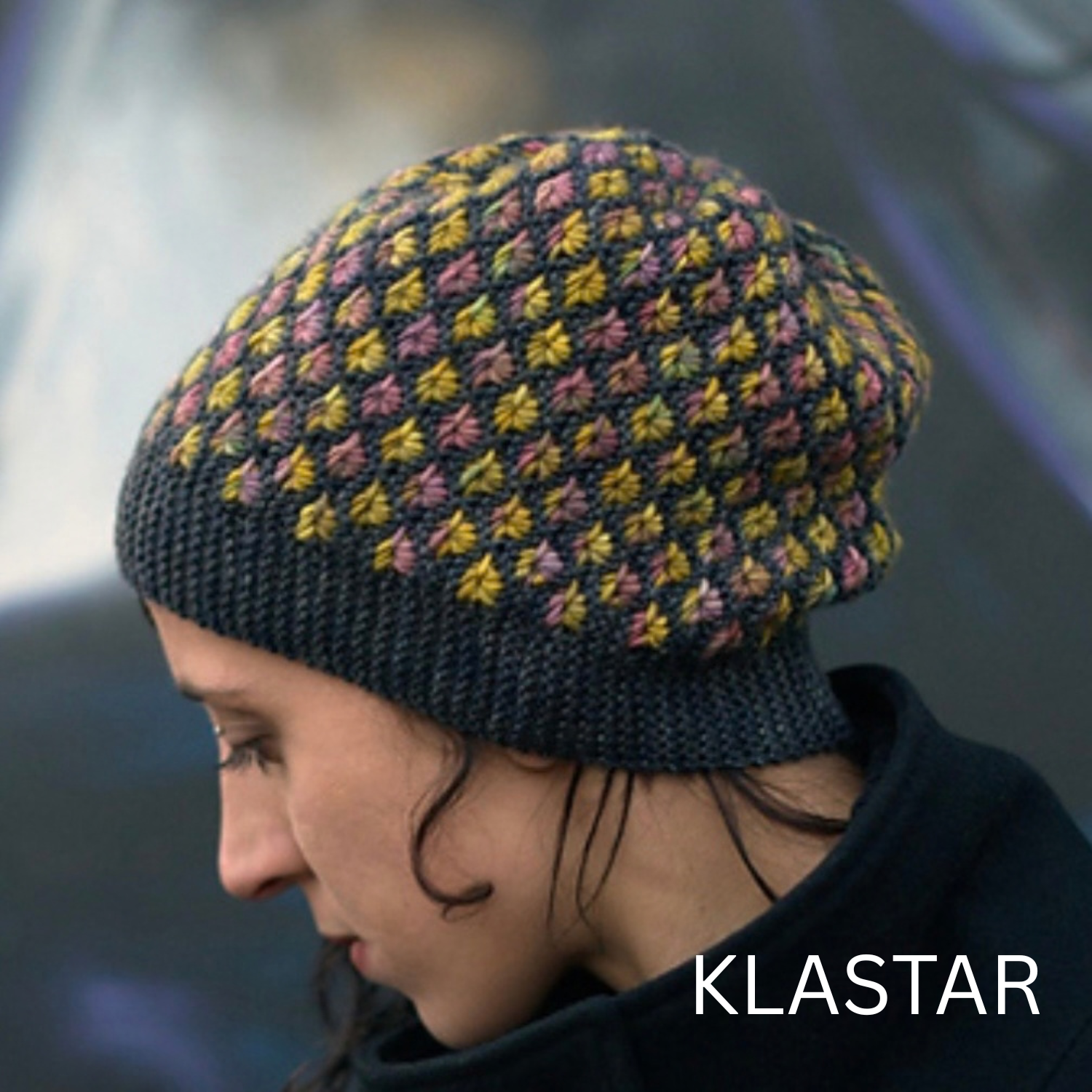
I would like to point out that all of these patterns can be purchased individually on Ravelry, which is how I’ve linked them above. But I do think that the book is very good value.
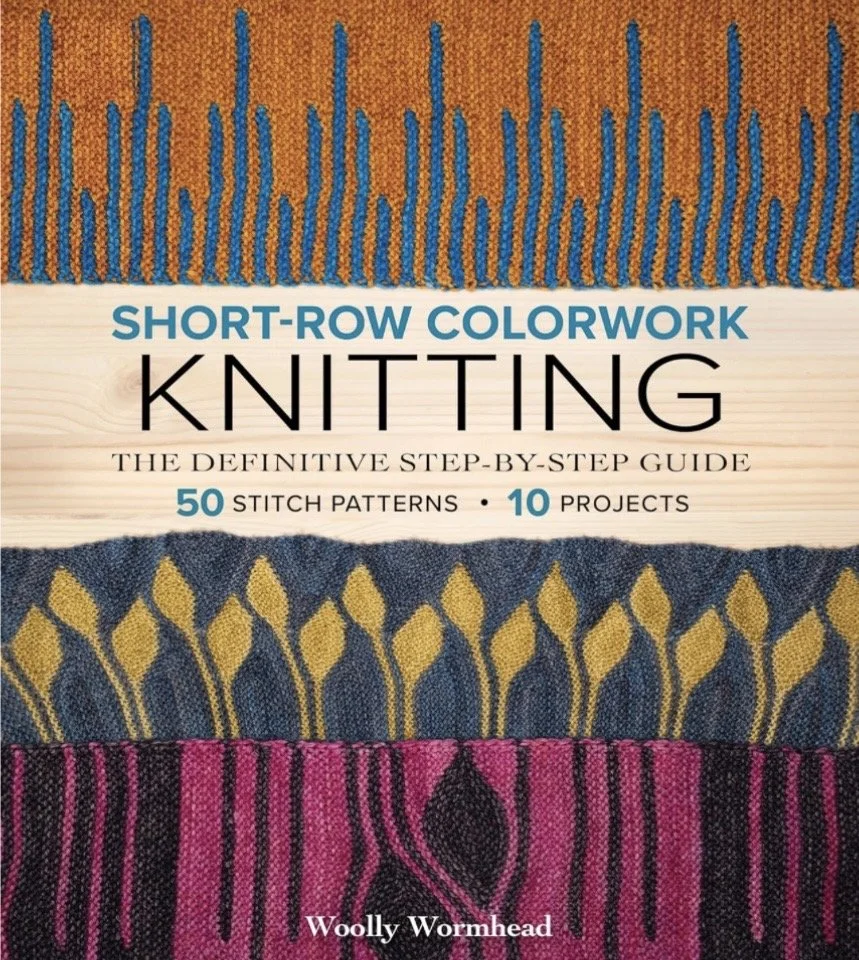
Now on to the other WW book I bought, which is called Short-Row Colorwork Knitting: The Definitive Step-By-Step Guide. This book is much more along the lines of some of my stitch dictionary books that I generally use to crochet afghans. The first 30+ pages are all about the concepts of short-row colorwork as well as detailed descriptions (with helpful pictures) of the techniques that are used, such as how to read the special charts for this knitting method, how to do German short rows, provisional cast-ons (specifically the so-helpful crochet cast-on), grafting Garter stitch, and more.
Then the book dives into fifty different stitch patterns, all of which are carefully photographed and clearly explained. I feel that this stitch dictionary would not necessarily help me create three-dimensional patterns of my own (like hats), because I would really struggle with the math to figure it out. But I could certainly make flat items, such as scarves, stoles, and cowls. If I could digress for just a moment, I’d like to make a statement about cowls: they are grossly undervalued as a cozy and elegant way to keep warm in a chilly situation. Everyone should have and wear cowls! Except perhaps my knitting friend Joan, who lives in Arizona. Joan, you are off the hook for wearing a cowl.
After the stitch pattens are all shown and explained, the author has included ten additional patterns, two of which are quite intriguing. I’m quite fascinated by the Damascena shawl, which is just astonishing. Here are a couple pictures of it:
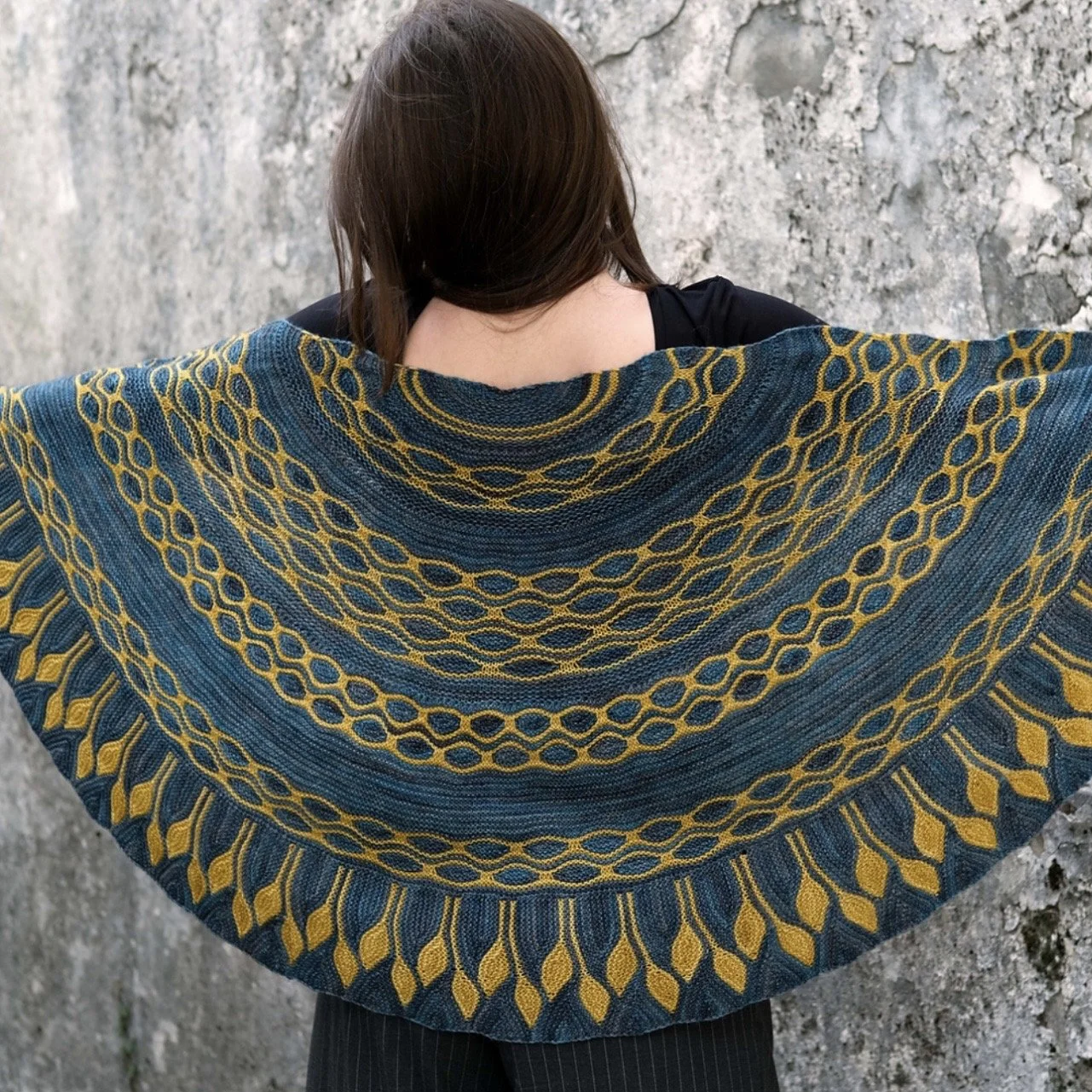
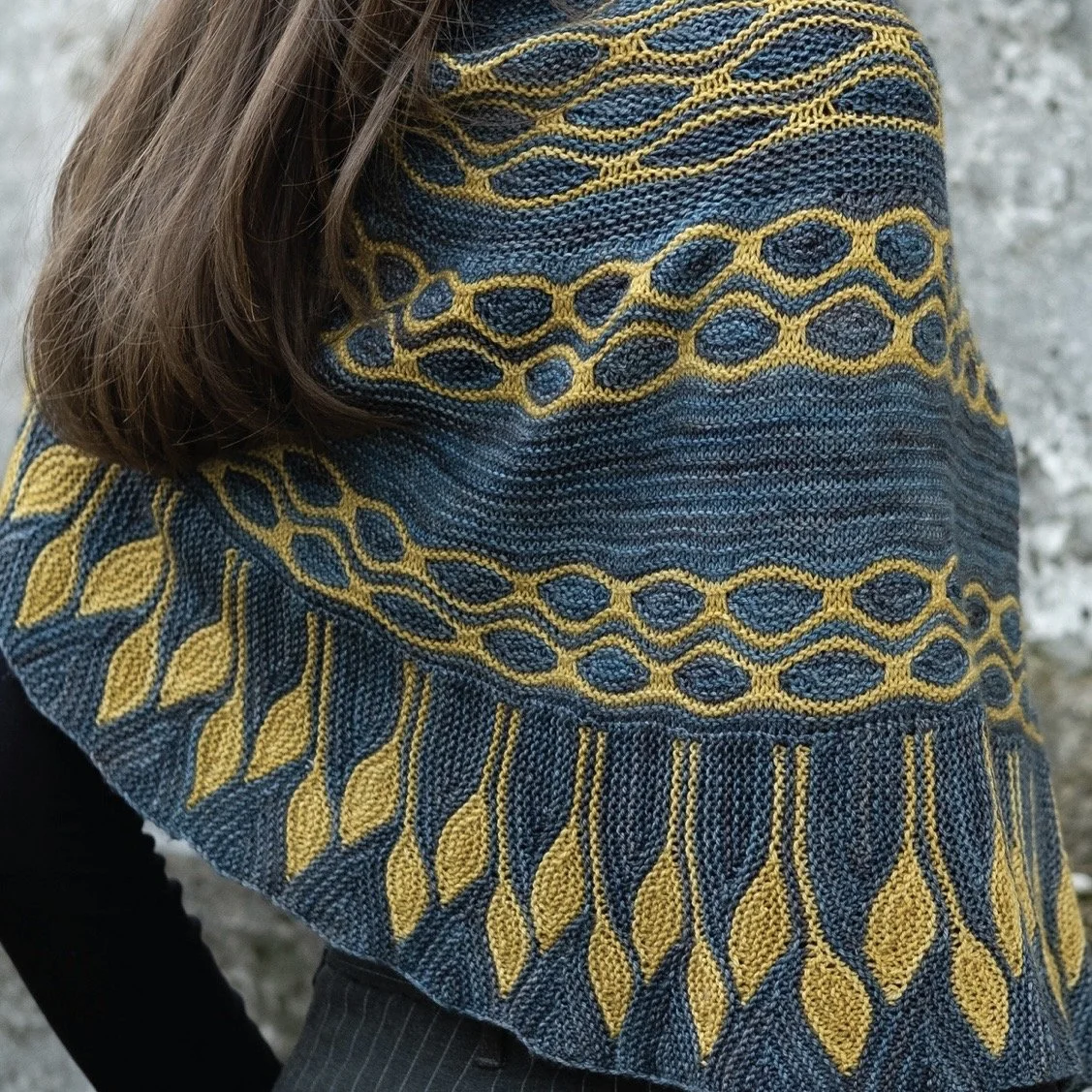
I don’t know if I’ll ever make this shawl. It’s a big project which I don’t think I’d ever wear and I can’t think of anyone I know who would like to have something like this. Although I do sometimes knit things simply for the joy of the making, I don’t generally do that for a project this size. I have to be sure it’s going to have a good home before I start.
The other pattern in this book that I will be making very soon (as soon as the yarn gets here, in fact) is called Montes.
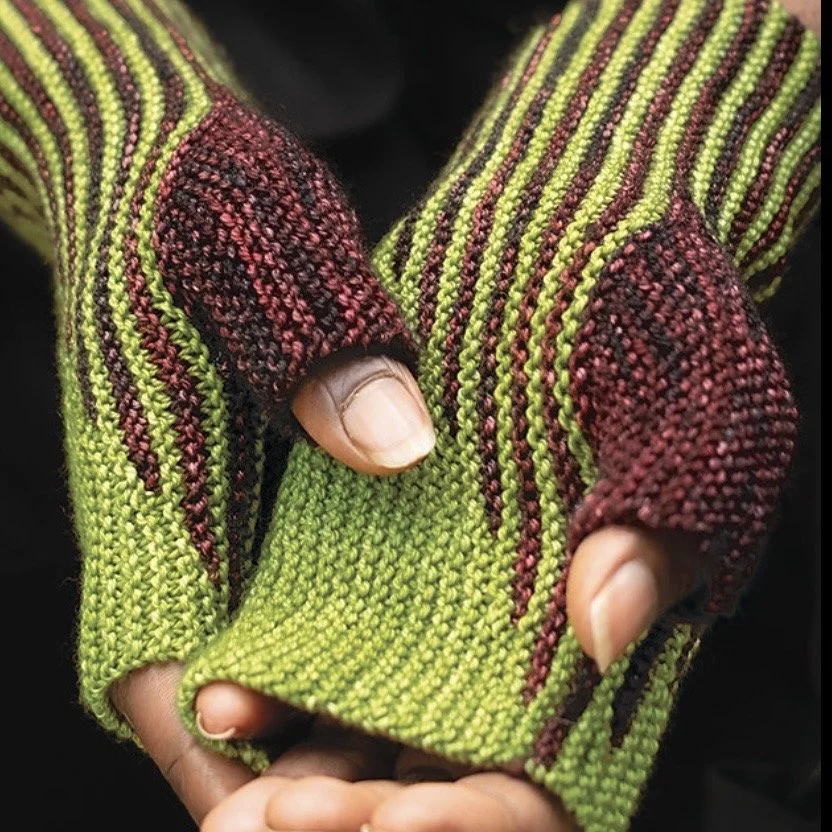
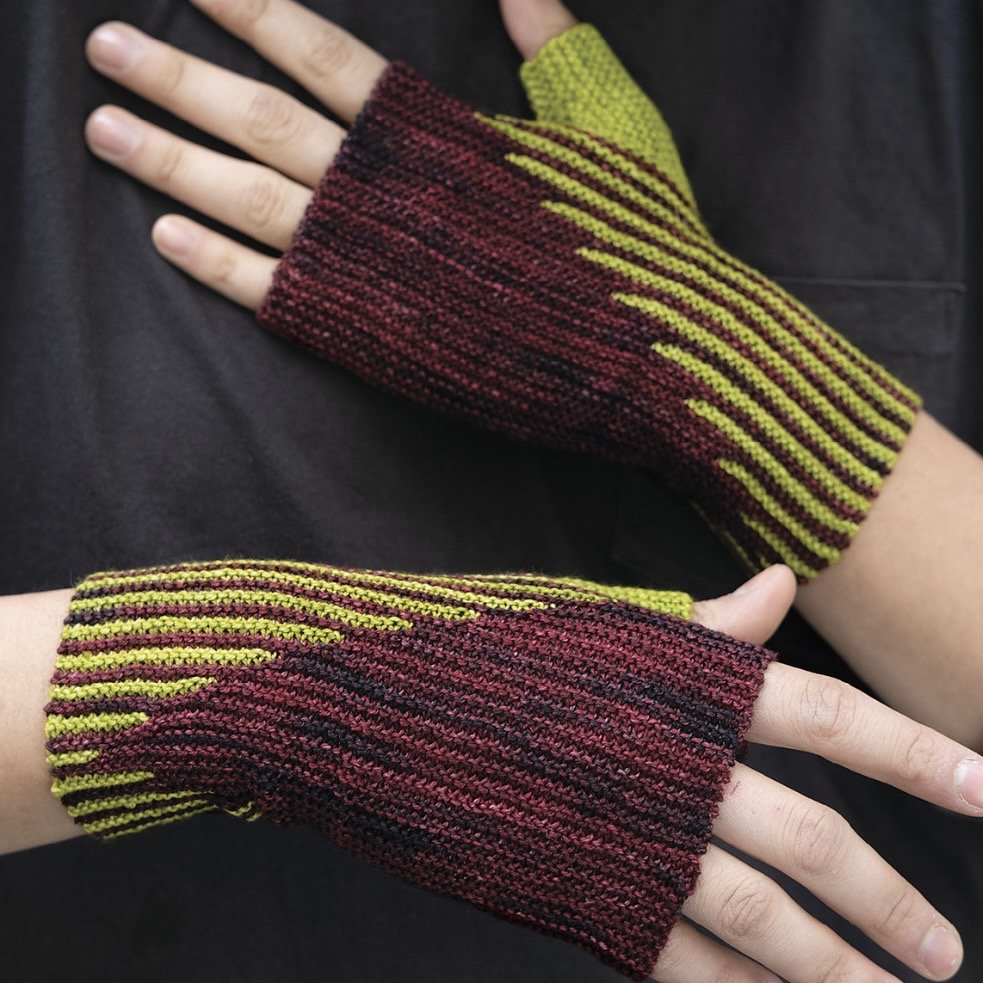
I’ve made many fingerless mitts in my time, but nothing like these. They are constructed sideways and then grafted at the end. This allows for the beautiful garter stitch striping, accomplished via short rows (obviously). The sideways garter stitch construction, as with hats knit sideways, allows for a LOT of stretch, making these extra comfy and able to fit a fairly wide range of hand sizes. Genius.
This book is excellent value and I highly recommend you add it to your knitting library. What? You don’t have a section of your library reserved just for knitting books? Well, you should remedy that immediately.