Adventures In The Hard Rain
As an Amazon associate, I may earn a small commission if you navigate to Amazon from my site and buy something. This will not result in an extra cost to you.
Back in May, my former co-worker and fellow bibliophile who I am calling Larry Porter recommended a book to me. Okay, I already need to digress. Larry Porter is tall and thin and wears perfectly round glasses. The day I first met him, I thought he looked like a grown up Harry Potter. When I expressed this opinion (because in my younger days, I thought all opinions should be immediately expressed), he smirked at me and replied, “Larry Porter.” And so he was.
Ahem. Where was I? Oh yes, a book recommendation for a novel entitled Seveneves, written by Neal Stephenson. It took a couple months for it to be available from the library, but I finally got it and read it. It was a little more “hard sci-fi” than I usually attempt. I like science just fine, but it’s not really my strong point. Add to that the fact that I have trouble visualizing things from written descriptions, and I find it extremely challenging to wrap my brain around futuristic constructions.
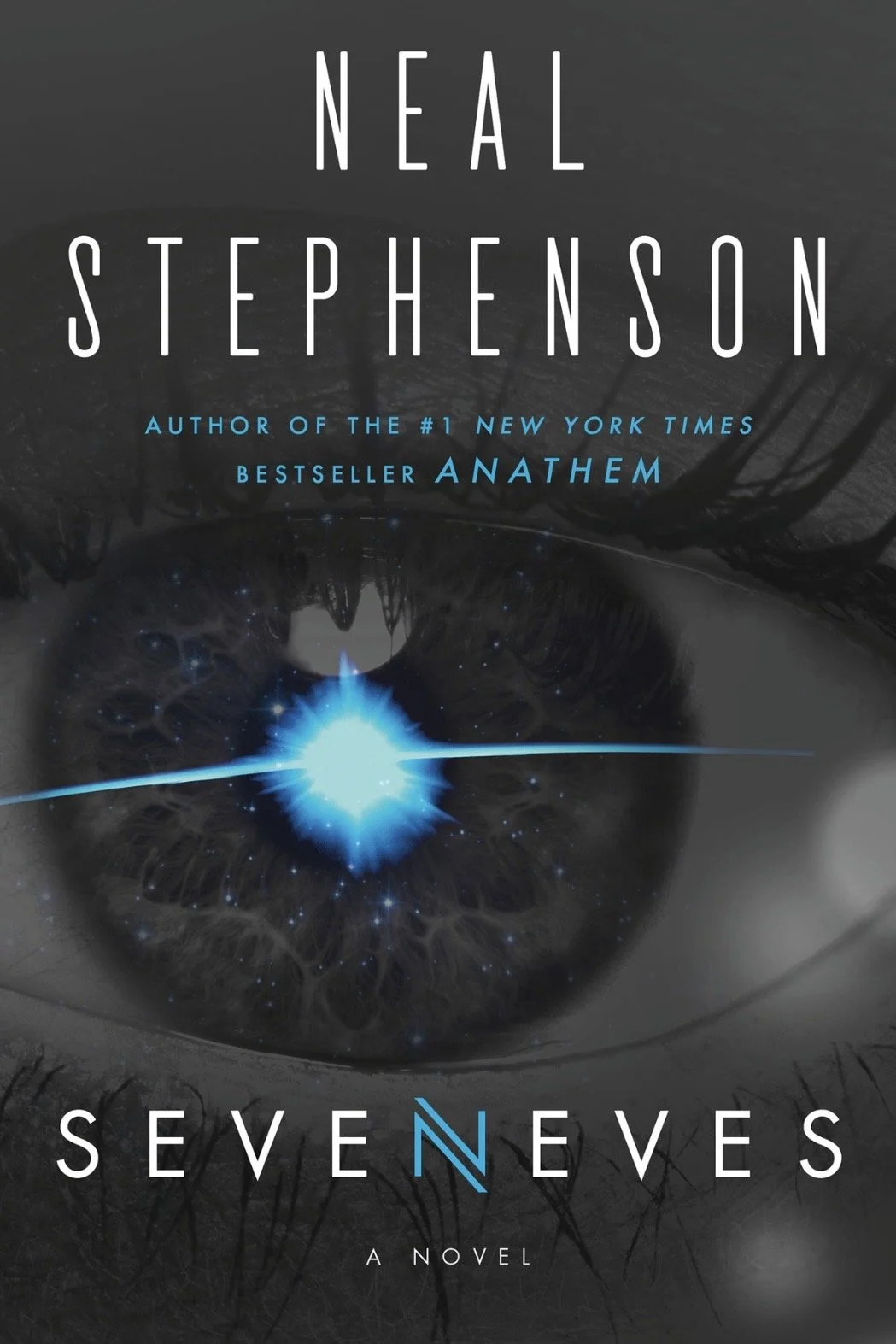
But I really enjoyed this book. There was more than enough solid characterizations of people in the story to keep me happy and the plot was compelling. It’s not the sort of book that can be skimmed…it must be read carefully, so it took me a bit longer than usual to get through it. Be advised, minor spoilers ahead.
The premise is that in the near-future, some unknown agent blows up the moon. “Agent” is the term used by the characters in the book. They don’t have any idea what did it, whether it was a natural phenomenon, an act of aggression by some unknown alien race, or an act of God (“smiting” is the term, I believe). No explanation is found but the people of Earth soon come to realize that they have larger concerns, as the large pieces of the moon that remain are smashing into each other, and breaking into smaller pieces. The more small pieces that are moving about, the more collisions occur. Eventually, the moon debris will form a ring around Earth along the same lines as the rings of Saturn.
Scientists figure out that they have about two years before a phenomenon they call “White Sky” occurs, which is when the moon’s disintegration reaches a sort of tipping point. During the two years, the Earth is naturally subjected to meteor strikes as some of the moon rocks fall to Earth. But after White Sky comes Hard Rain. This is an overwhelming number of meteor strikes, smashing the heck out of the ground. But they are also heating up the atmosphere, which gets hotter and hotter, with no opportunity to cool down. The end result is that everything will burn. For centuries. All life on Earth will be extinct.
The nations of the world come together and throw all their resources into building an escape into space for a dismayingly small proportion of the world’s billions. Once the few survivors are in space, there are many challenges to be met and overcome. Some responses are selfish and cowardly, and some are selfless and heroic. But most everyone dies. By the midpoint of the story, only a handful remain. They find a place to shelter from the asteroid strikes and hunker down to ride out the centuries. And then the millennia. In the meantime, they have to regenerate the human race, which they do by using digital DNA information to create babies with enough genetic diversity to result in a sustainable population.
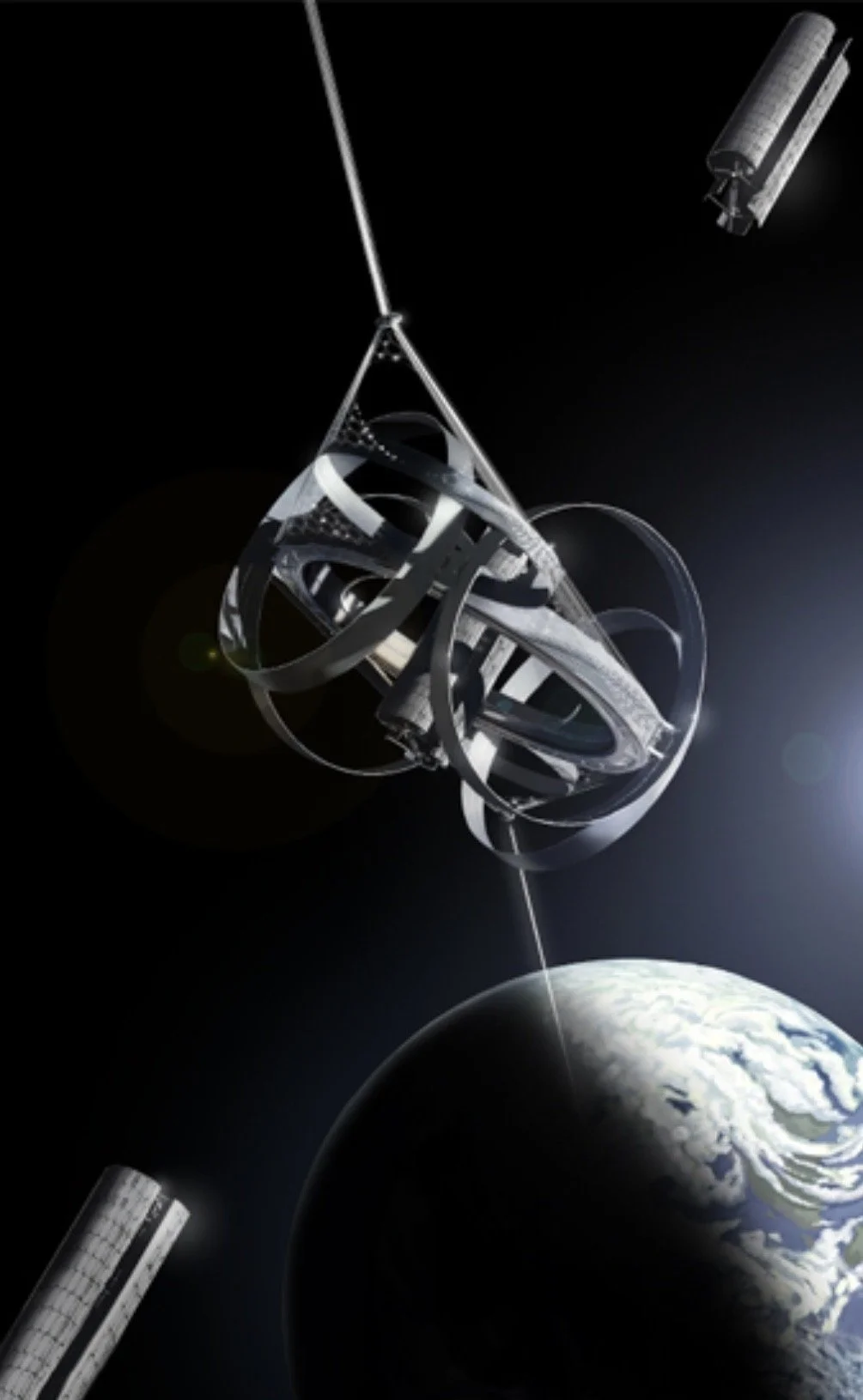
The last (roughly) third of the book is “5000 years later,” when the survivors have become numerous, have created many space habitats in which to live, and are reseeding the Earth, starting with water, then plants, then animals. People are now going down to the surface as well. There are many descriptions of the various space habitats, including a fantastical structure that stretches to the Earth and then thousands of kilometers in the other direction.
I’m not going to explain the plot any further, because I really don’t want to spoil it any more than I already have. Rather, I’d like to talk about the plot structure of the book. First, it’s long. The paperback is 867 pages long. Second, I think this should have been two books (Larry called it “a trilogy in disguise”). The first part of the book ends right when the few survivors have decided to start having babies. This skips what I feel would have been the most interesting part of the story…the determined survival and dedication to repopulation. I have enough medical knowledge to have found this fascinating, and also, I wasn’t ready to say goodbye to the characters when the author stopped writing about them. So I’d have liked the “first book” to be the escape from Earth and the “repopulation.”
The “second book” could have been the “5000 years later” part of the story, which I felt went by quite quickly and then ended abruptly and in what I thought was a very strange place. Don’t get me wrong, this book is complete in and of itself—no cliffhanger or unsatisfactory resolution, as such. I just thought it ended a little early in the overall story.
But I’m no professional author, so who cares what I think about the plot structure. What you need to know is that it’s a really good book and you should read it. I wonder if they’ll try to make a movie out of it…